
Light touch provides us with instant tactile input by which we can react to our environment in a quick and efficient manner. For example, the sensation of something crawling on your arm may elicit your quick response in swiping at whatever it is off your arm. The unexpected light touch can trigger the sympathetic nervous system, which is responsible for the fight or flight response of our body. This is a great mechanism through which we can keep ourselves safe in our environment. We respond to the threat (real or perceived) and return to a resting state. However, for some children, it can be a real struggle to “turn off” the sympathetic nervous system once it has been activated. They may present as hyperactive, “out of control,” anxious or angry. This challenge with regulation of the sympathetic nervous system can contribute to increased physiological stress responses of the body, which can negatively impact learning and overall health.
Deep pressure provides us with a more sustained sensory input. It allows us to increase awareness of where our body is in space because we can feel the pressure in our muscles and joints. It can assist in deescalating the sympathetic nervous system while influencing increased activation of the parasympathetic nervous system. Our parasympathetic nervous system counterbalances our sympathetic nervous system by physiologically putting the body into a more resting state. When the body is in a resting or more relaxed state, conditions are more optimal for learning and overall health. In a recent systematic review, the use of deep-pressure sensory input was identified as positively impacting functional outcomes in children (Piller et al., 2025). This included improvements in areas such as motor skills and sleep behaviors. It has also been viewed as being effective in reducing stress and anxiety along with improving emotional regulation.
Deep pressure is something that we already do in life. For example, the act of swaddling a baby can provide a deep pressure through the snugness of the fabric. A prolonged and sustained hug can be calming to an upset child. Simply put, our bodies respond positively to deep pressure by helping us modulate and regulate our nervous systems. Deep-pressure sensory experiences can have a calming or relaxing effect on children with sensory problems.
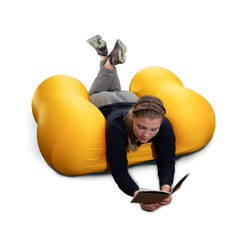
Southpaw’s Steamroller® Deluxe and Advantage Line Steamroller provide deep-pressure input along with motor planning and problem-solving opportunities for a child to crawl through the rollers. They also both allow for the child to stay in position between the rollers in a prone or supine position while performing a variety of fine motor and visual perceptual activities. Southpaw’s Squeeze Me provides deep pressure for a child in either the prone or supine positions while keeping the arms and hands free to perform fine motor and visual perceptual activities. Users of the Sensory Lounger can shift position to provide rapid deep-touch pressure to the lateral, medial, ventral and dorsal sides of the body—offering comfort exactly where they need it most.
References
Piller A, McHugh Conlin J, Glennon TJ, Andelin L, Auld-Wright K, Teng K and Tarver T (2025) Systematic review of sensory-based interventions for children and youth (2015–2024). Frontiers in Pediatrics. 13:1720179. doi: 10.3389/fped.2025.1720179