
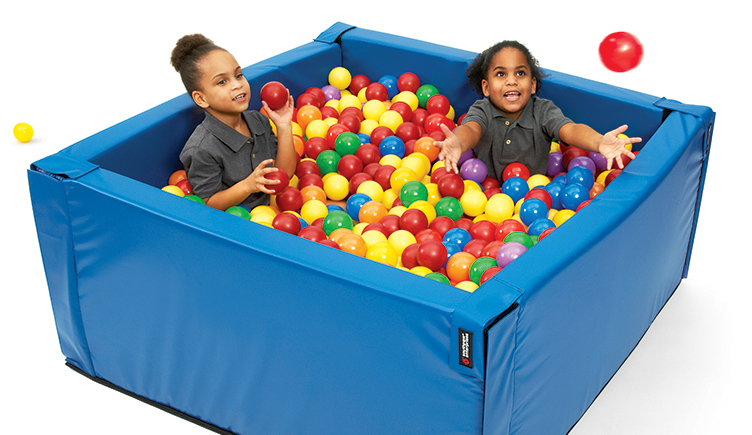
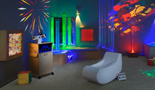
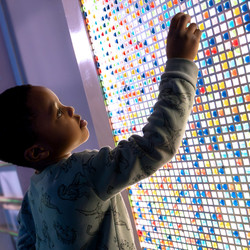
Multisensory environments (MSEs) provide individuals with opportunities to control and engage with sensory input based on their personal preferences and needs. These environments incorporate specialized equipment that delivers a variety of sensory experiences, including visual, tactile, proprioceptive, vestibular, olfactory, and sometimes gustatory stimulation, allowing users to receive sensory information in the types and intensities that best support their participation and engagement (Hogg et al., 2001).
Although MSEs were originally designed to provide a calming and therapeutic space for individuals with intellectual disabilities, their use has expanded across a wide range of settings and populations. Today, MSEs are commonly utilized to support individuals with mental health conditions, dementia, traumatic brain injuries, and other neurological or developmental disorders, helping to promote relaxation, engagement, sensory regulation, and overall well-being (Cameron et al., 2020).
Multisensory Environments for OT Students
Research demonstrates that MSEs can significantly reduce symptoms of anxiety and depression, while also enhancing quality of life, even among college-aged individuals (Lim et al., 2021). As future practitioners, OT students will encounter diverse practice settings, including pediatrics, mental health, dementia care, intellectual and developmental disabilities, rehabilitation, and community-based programs. In these contexts, MSEs support participation, reduce challenging behaviors, improve attention, and enhance occupational performance. Gaining hands-on experience with MSEs equips students with evidence-based intervention strategies. It deepens their understanding of how environmental modifications can positively impact client function, engagement, and overall quality of life.
In our graduate-level program, students explore items such as the Platform Swing for sensory integration, Bubble Tubes, Riverstones, and Fiber Optic lights in an MSE learning lab. These hands-on learning experiences aim to challenge students to engage with diverse sensory inputs and to consider how these tools are used as interventions for different populations. While in the lab, students have opportunities to deepen their learning by accessing more information about the tools using strategically designed Quick Response (QR) codes.
Further the Learning: QR Codes
QR codes are a common feature on many products and in a variety of industries. These small, scannable codes can provide users with information, including supplemental content such as videos, text, or images (Celalettin Aktaş, 2017). In multisensory spaces, these QR codes may directly link users to product information to ensure safety when utilizing equipment. Additionally, QR codes can provide learners with instant access to resources that inform a variety of intervention options using specific equipment, enabling access to this information beyond the limited lab experiences (Minard, 2024).
In the MSE lab experience, students may scan QR codes that link them to a case study on the use of a specific sensory tool. The case study may require them to consider why a particular tool is used, any contraindications or safety concerns associated with the item, and how the tool could be graded or adapted to meet the needs of diverse clients. For example, the Platform Swing for sensory integration may include QR codes linking to a video demonstrating the use of the swing, safety considerations for rotational movement with individuals, or an evidence-based article on using this intervention with a specific population.
Further Consideration
MSEs are often used in a variety of settings beyond higher education. Clinical settings serving diverse populations, including pediatric and adult clients, may benefit from the use of MSEs in therapeutic interventions to promote function and participation. The addition of QR codes to these environments may also provide easy access to safety information, specific home program activities for clients, or direct links to product information. Integrating these codes into MSEs may allow clients to participate more independently in individualized programming, or promote continuity of service delivery across providers, whether licensed therapists, support staff, or caregivers.
References
Cameron, A., Burns, P., Garner, A., Lau, S., Dixon, R., Pascoe, C., & Szafraniec, M. (2020). Making sense of multi-sensory environments: A scoping review. International Journal of Disability, Development and Education, 67(6), 630–656.
Celalettin Aktaş, A. (2017). The evolution and emergence of QR codes. Cambridge Scholars Publishing.
Hogg J., Cavet J., Lambe L., & Smeddle M. (2001). The use of “Snoezelen” as multisensory stimulation with people with intellectual disabilities: A review of the research. Research in Developmental Disabilities, 22, 353–372. https://doi.org/10.1016/S0891-4222(01)00077-4
Lim, J. Y., Kim, J. H., Lee, S. M., & Jang, W. H. (2021). Effects of Snoezelen therapy on stress, anxiety, depression, and quality of life of college students with game addiction. The Journal of Korean Physical Therapy, 33(3), 123–130. https://doi.org/10.18857/jkpt.2021.33.3.123
Minard, C. (2024). Use of QR codes to enhance learning in a graduate-level clinical course. Journal of Formative Design in Learning. https://doi.org/10.1007/s41686-024-00092-0