
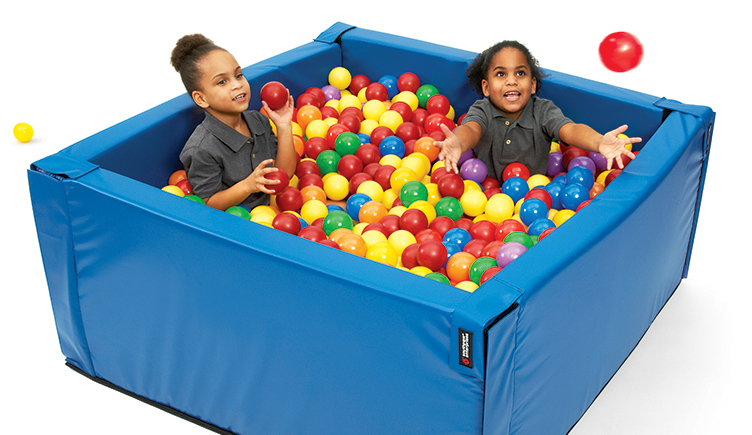
Play is widely recognized as the primary occupation of childhood, but what about play in adulthood?
The American Occupational Therapy Association (2020) defines play as “activities that are intrinsically motivated, internally controlled, and freely chosen and that include freedom to suspend reality” (p. 34). While the benefits of play extend well beyond childhood, competing demands, responsibilities, and social norms present as barriers to play in adulthood.
For adults with diagnosed mental health conditions, play is especially powerful. Shen and Masek (2024) found engagement in play improved positive aspects of mental health and reduced negative aspects and further identified play as both a means and an end to support well-being. Integration of play as a means to an end in psychiatric and community-based settings can meaningfully support well-being for individuals.
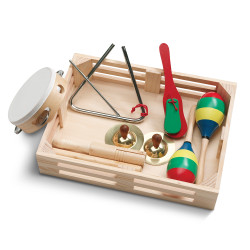
Psychiatric settings present unique challenges, as individuals experience varying acute symptoms, and intervention tools must adhere to safety precautions and accrediting body regulations. Sessions are often delivered in group format, adding inherent social benefit. The Band in a Box is a great group intervention tool for play as a means to an end. As a means, individuals collaborate to create organic, rhythmic sound, learning to attend to one another, mirroring the foundational skills of communication and reciprocal conversation. As an end, the intervention can be graded up to encourage individuals to write lyrics, perhaps a song of resilience or a chant to engage the vagus nerve!
In community-based settings, the Parachute is a perfect tool for play as a means. Structured play, like working together to “shoot” a beach ball toward a target, builds communication, frustration tolerance, resilience, and creative problem-solving—while also creating opportunities for celebration that enhance self-esteem and self-efficacy.
For play as an end, the Floor Disc can be transformed into a human game-board spinner. Individuals can write coping skills on sheets of paper around the room, then spin on the Floor Disc to land on a skill to demonstrate. Game-show music can be added for an extra dose of humor!
Play may be the primary occupation of childhood, but it doesn’t have to stop there. For adults navigating mental health challenges, play offers a powerful, evidence-informed pathway to healing. Occupational therapy practitioners are well-positioned to promote play in adulthood, demonstrating that healing doesn’t have to be heavy… it can be fun!
References
American Occupational Therapy Association. (2020). Occupational therapy practice framework: Domain and process (4th ed.). American Journal of Occupational Therapy, 74(Suppl. 2), Article 7412410010. https://doi.org/10.5014/ajot.2020.74S2001
Shen, X., & Masek, L. (2024). The playful mediator, moderator, or outcome? An integrative review of the roles of play and playfulness in adult-centered psychological interventions for mental health. The Journal of Positive Psychology, 19(6), 1037–1050. https://doi.org/10.1080/17439760.2023.2288955